

Private Residence
Intertwined House
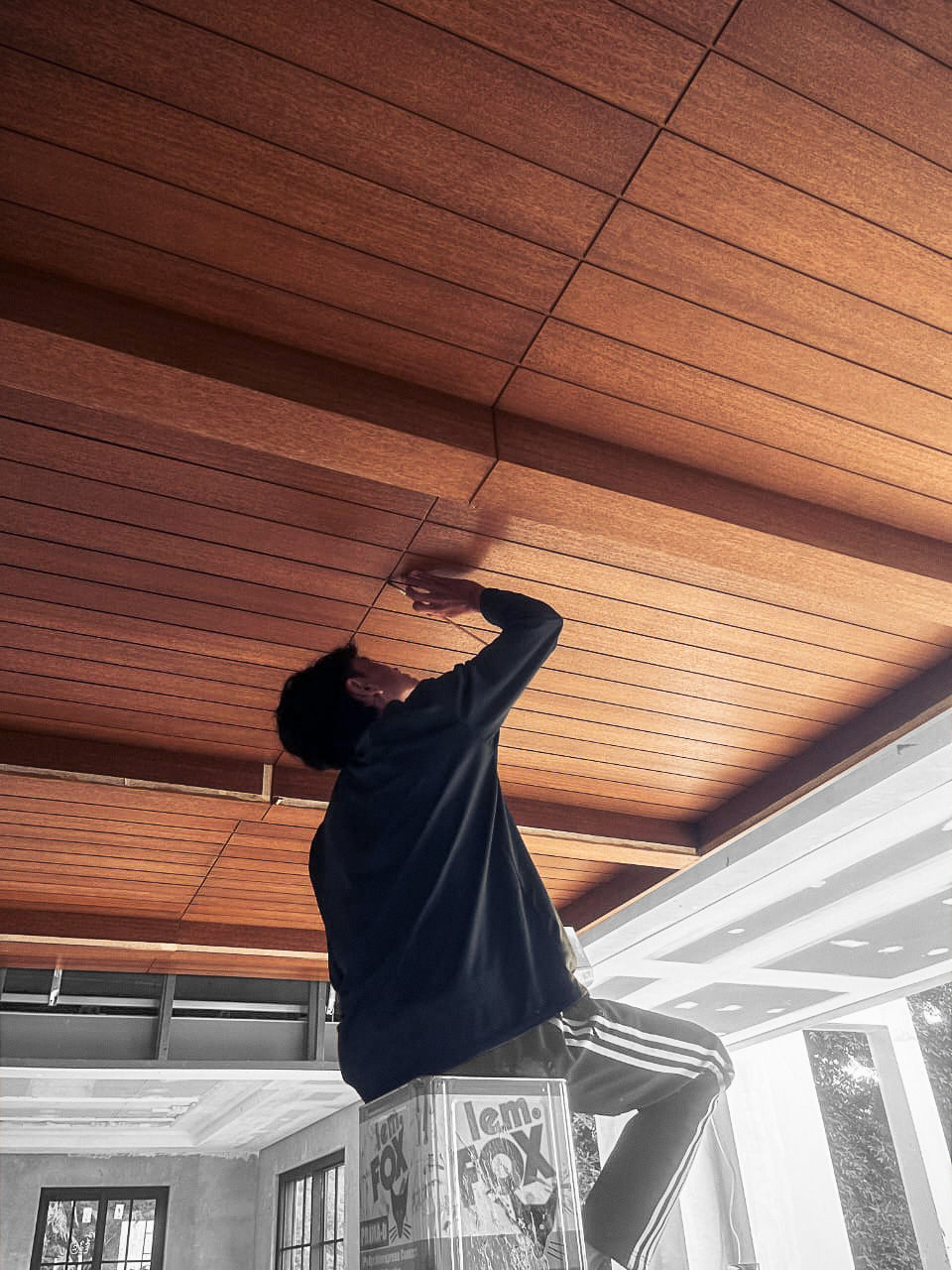
Jabon Glulam Central Core Connecting Two Residences into a Unified Family Structure


Architect
K-Thengono Design Studio

year
2023

location
South Jakarta, Indonesia

size
115 m²
The Brief
Project Overview
Intertwined House, designed by K-Thengono Design Studio, sits on a shared plot in South Jakarta where two separate homes are joined by a central living core. Instead of dividing the land into isolated volumes, the design introduces a structural bridge built entirely from Jabon glulam.
This central space is not decorative. It is the structural and social anchor of the project. The glulam core connects two households into one shared public heart.
Objective
The objective was to unify two independent residences through a structurally expressive shared space by delivering:
A 100 percent glulam structural core
Clear load distribution across two adjoining volumes
An efficient shared public living zone
Warm, natural structural expression that reinforces family identity

The Constraints
Dual-Residence Coordination
The structure had to connect two separate building masses while maintaining clarity in load transfer and expansion movement.
Central Structural Concentration
The shared living room carried both symbolic and structural weight. Beam sizing and alignment required precise calibration.
Urban Site Conditions
Located in Permata Hijau, South Jakarta, installation required careful transport sequencing and coordination.
Emotional and Functional Expectations
The space had to feel intimate and unified, not like a structural compromise between two buildings.
The Engineering
100 Percent Glulam Structural Core
Laminated Jabon beams formed the entire shared structural core.
Load Path Integration
Structural analysis resolved forces from both volumes into the central frame without overstressing connections.
Dimensional Stability Strategy
Laminated construction reduced movement compared to solid timber, improving long-term alignment between the two homes.
Beam Optimization
Member depth and spacing balanced structural reliability with visual openness.
The Products and Materials

The Results and Insights
Two Homes Unified Without Structural Conflict
The glulam core successfully bridges two residences while maintaining structural independence where required.
Shared Living Efficiency Achieved
The central room maximises land use and reinforces family interaction without duplicating public spaces.
Structure as Social Connector
The project demonstrates how engineered timber can embody relational intent, not only structural logic.
Complex Load Integration Validated
Intertwined House strengthens Woodlam’s capability in multi-volume structural coordination within dense urban sites.


Location
South Jakarta, Indonesia
INDONESIA
Frequently Asked Questions
Got a question unanswered? Speak to our team.
Why use glulam instead of conventional framing for the central core?
Glulam provides consistent strength, reduced natural defects, and longer-span capability. This ensures structural clarity across a shared space connecting two buildings.
How are two houses structurally connected without instability?
Through careful load-path analysis and connection detailing. The shared core resolves structural forces while allowing controlled movement where necessary.
Does a central shared space compromise privacy?
No. The structural core defines a shared public zone while the two residences maintain independent private areas. The system supports both connection and separation.
Why is this project strategically important for Woodlam?
Intertwined House demonstrates Woodlam’s expertise in structural integration across multiple volumes. It reinforces capability in engineered timber systems that serve both technical performance and social intention.
Explore Glulam Structural Cores for Multi-Residence or Shared-Family Developments
Discuss how engineered glulam systems can connect separate building volumes through a structurally integrated core, optimising land use, clarifying load distribution, and creating warm shared spaces within urban residential environments.